
Your baby is six months old, and you are probably wondering what comes next. What should you feed them? Should you start with ragi, rice, or fruit? How much should they eat? And does starting solids mean you need to stop breastfeeding?
For many Indian families, the answer can be found in the foods already being cooked at home. Ragi, rice, moong dal, vegetables, and seasonal fruits can all become part of your baby’s first foods when prepared in a suitable texture.
Weaning is a gradual process. Your baby is learning to eat while breast milk or formula continues to remain an important part of their diet.
When Should You Start Weaning Your Baby?
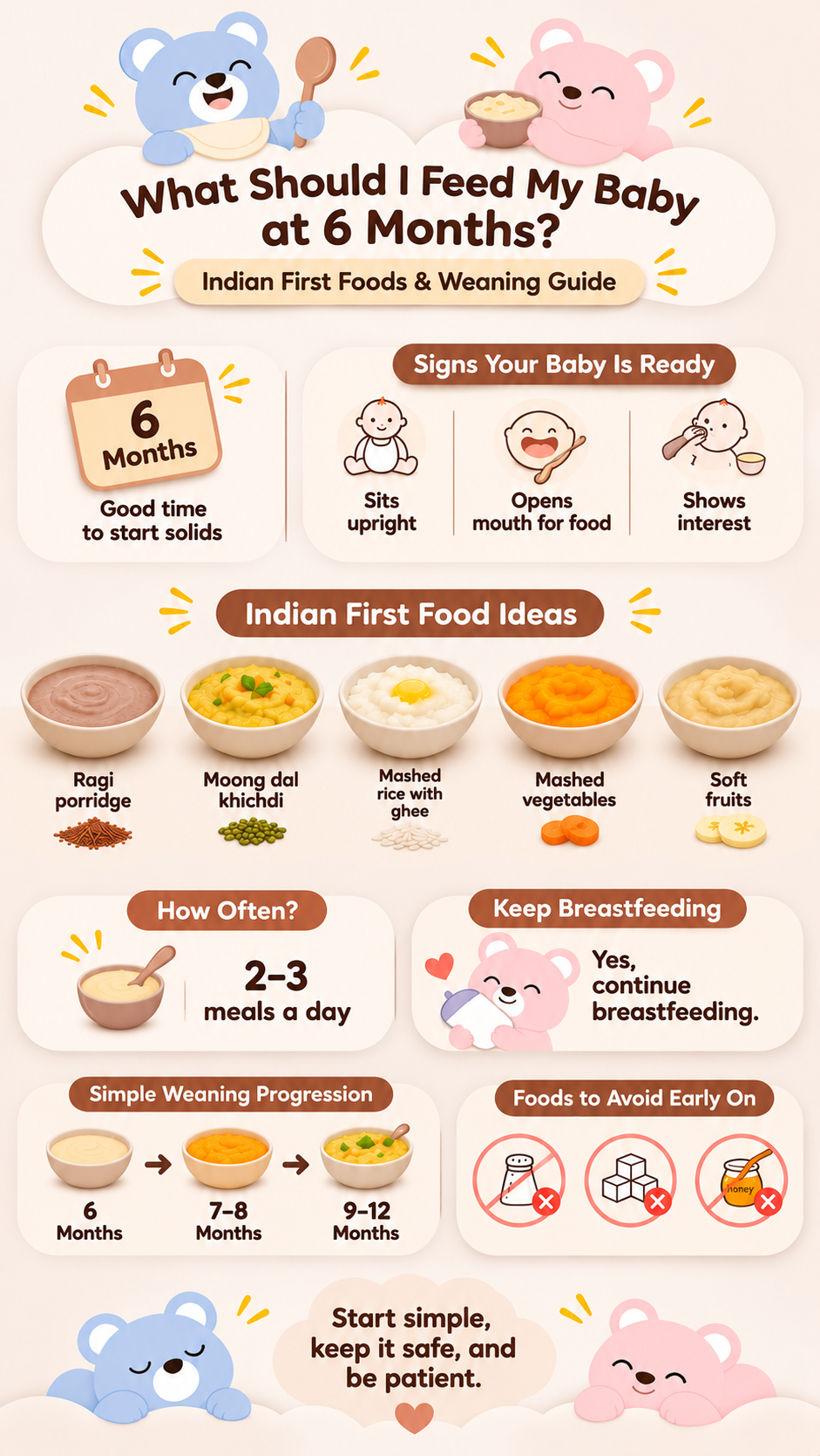
Most babies can start complementary foods at around 6 months, provided they are developmentally ready. WHO recommends introducing complementary foods at 6 months while continuing breastfeeding up to 2 years or beyond.
Signs Your Baby Is Ready for Solids
Age is only one part of the picture. Your baby should also show signs that they are ready to handle food.
You may notice that your baby:
- Can sit upright with good head and neck control
- Brings objects towards their mouth
- Shows interest when others are eating
- Opens their mouth when food is offered
- Can swallow food instead of repeatedly pushing it out
If your baby was born prematurely or you have concerns about their development or feeding, speak to your paediatrician before starting solids.
What Should You Feed Your Baby at 6 Months?
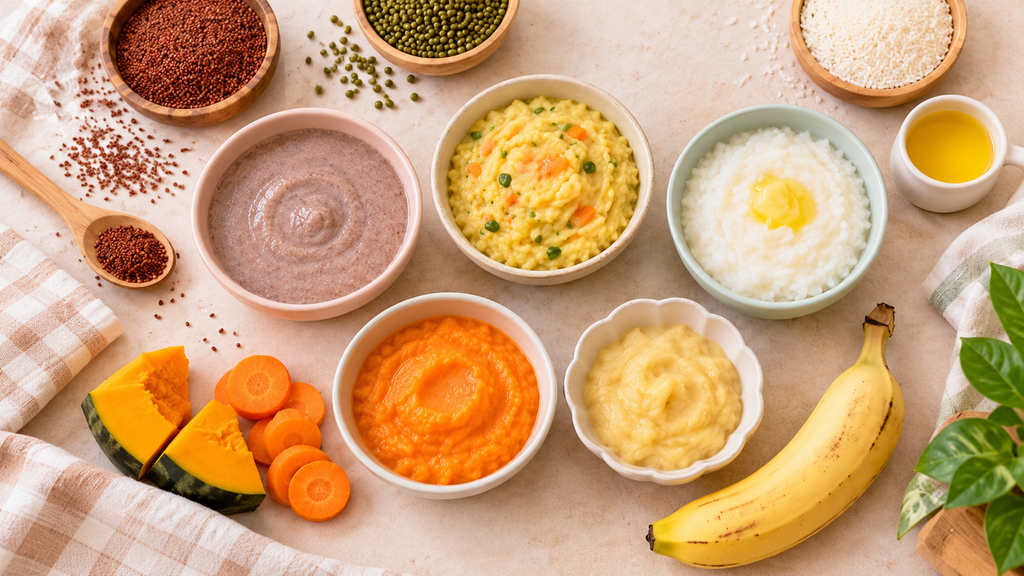
There is no fixed order in which you need to introduce foods. Start with small amounts of soft, well-cooked foods and gradually introduce more variety and different textures.
For Indian families, some simple options include:
- Ragi porridge
- Moong dal khichdi
- Mashed rice with a little ghee
- Cooked and mashed vegetables
- Soft fruits such as banana
- Well-cooked dal
- Soft cereals and grains
The idea is to gradually introduce your baby to different tastes, textures, and food groups rather than trying to find one perfect first food.
Ragi Porridge
Ragi is a familiar ingredient in many Indian kitchens and can be prepared as a simple porridge.
Cook ragi flour thoroughly with water until it becomes smooth. Keep the consistency suitable for your baby’s stage of eating.
There is no need to make it sweet. Avoid adding sugar, honey, or unnecessary salt to your baby’s food.
As your baby becomes more comfortable with solids, the porridge can gradually become thicker.
Moong Dal Khichdi
Moong dal khichdi is a simple homemade meal that can be adapted for a baby.
Cook rice and moong dal together until very soft. You can also add vegetables such as pumpkin, carrot, or bottle gourd. Mash everything well and adjust the consistency according to your baby’s feeding stage.
For a baby just starting solids, keep the khichdi soft and smooth. As their eating skills develop, you can gradually move towards thicker textures.
Mashed Rice With Ghee
Rice is another familiar food that can easily be adapted for a baby.
Cook the rice until it is very soft and mash it thoroughly. A small amount of ghee can be added if appropriate for your baby’s diet.
Keep the preparation simple. There is no need to add salt, sugar, or strong spices.
As your baby grows, rice can become part of more varied homemade meals.
Soft Cooked Vegetables
Vegetables such as pumpkin, carrot, sweet potato and bottle gourd can be cooked until soft and mashed.
You can offer different vegetables separately at first so your baby gets used to their individual tastes. Later, they can be combined with rice or dal.
Do not be discouraged if your baby refuses a vegetable the first time. New foods can take some getting used to.
Soft Fruits
Soft, ripe fruits can also be introduced during the early stages of complementary feeding.
Banana is particularly easy to mash and serve. Other fruits can be introduced in an age-appropriate texture as your baby becomes more comfortable with food.
Always prepare fruits in a way that matches your baby’s developmental abilities and reduces choking risk.
How Much Should a 6-Month-Old Eat?
In the beginning, your baby may eat only a few spoonfuls. That is not unusual.
Eating is a new skill, and your baby is learning how to sit through a meal, handle food, move it around their mouth, and swallow different textures.
How Much Food Should You Start With?
Start with small portions and gradually increase the quantity as your baby becomes more comfortable. WHO recommends progressively increasing the amount and variety of complementary foods as babies grow.
Your baby’s appetite can also change from one day to another. Pay attention to hunger and fullness cues rather than trying to make them finish a particular amount.
How Often Should You Give Weaning Food?
When your baby first starts solids, meals can be small and gradually become more frequent.
WHO recommends 2 to 3 meals a day for babies between 6 and 8 months, increasing to 3 to 4 meals a day from 9 months, with additional nutritious snacks as appropriate.
You do not need to establish a strict routine immediately. Start gradually and build a meal pattern that works for your baby and your family.
Can You Continue Breastfeeding While Weaning?
Yes. Starting solids does not mean you have to stop breastfeeding.
At this stage, food is complementary to breast milk rather than an immediate replacement for it. WHO recommends continuing breastfeeding alongside complementary foods up to 2 years or beyond, as long as the mother and child wish to continue.
So if your baby wants to breastfeed after eating a small bowl of khichdi, there is no need to worry.
What Is Baby-Led Weaning?
You may have come across baby-led weaning, or BLW, while researching how to start solids.
With baby-led weaning, babies are encouraged to pick up and eat appropriately prepared finger foods themselves rather than being fed only with a spoon.
Baby-Led Weaning vs Spoon-Feeding
You do not necessarily have to choose between traditional spoon-feeding and baby-led weaning. Some families use both approaches as their baby develops.
Whatever approach you follow, make sure your baby is ready for the texture being offered, prepare food appropriately, and stay with them while they eat.
As your baby’s eating skills develop, you can gradually move from smooth and mashed foods towards thicker textures and appropriately prepared finger foods.
Which Foods Should You Avoid During Weaning?
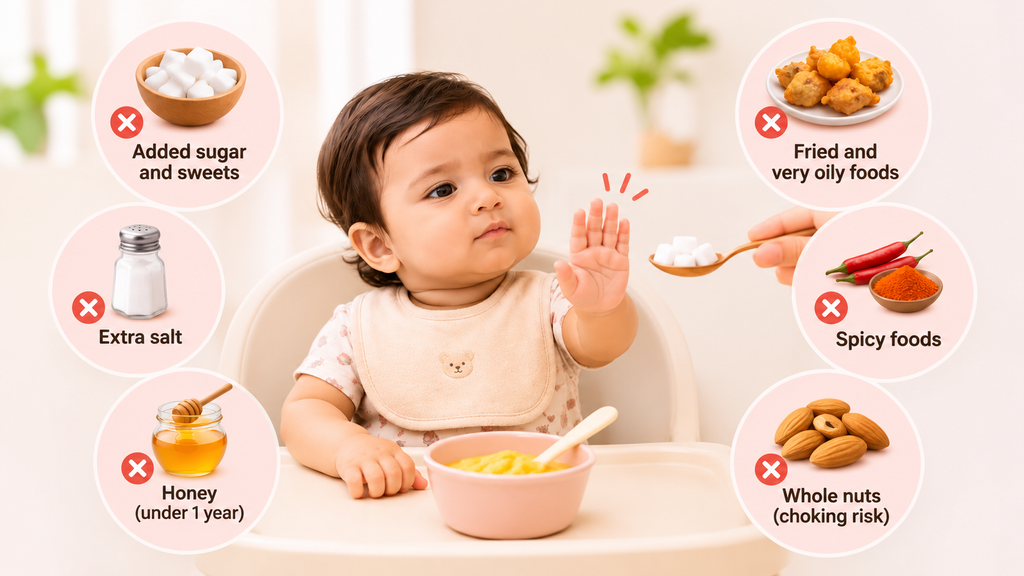
Food preparation becomes particularly important when your baby starts eating solids.
Avoid foods and textures that can cause choking, and prepare food according to your baby’s developmental stage. Babies should always be supervised while eating.
Foods and Textures That May Cause Choking
Food should be soft and prepared in a size and texture your baby can safely manage. Avoid giving foods in forms that are difficult for a baby to chew or swallow.
Salt, Sugar and Other Ingredients to Limit
There is no need to add extra salt or sugar to your baby’s meals. Keeping early foods simple also allows your baby to become familiar with the natural taste of different ingredients.
If you are unsure about introducing a particular food or allergen, speak with your paediatrician.
A Simple Indian Weaning Progression
You do not need a complicated meal plan when your baby is just starting solids.
| Baby’s Age | Foods to Introduce |
| Around 6 Months | Begin with small amounts of soft foods such as ragi porridge, mashed rice, smooth dal and soft vegetable preparations. |
| 7 to 8 Months | Gradually introduce thicker khichdi, mashed vegetables, fruits and a wider range of textures as your baby becomes comfortable eating. |
| 9 to 12 Months | Offer more of the foods your family eats, prepared in a form and texture your baby can safely manage as their eating skills develop. |
| Important Tip | Increase food variety and texture gradually rather than rushing the process. |
Weaning Is a Learning Process
Some babies take to solids quickly. Others need more time to get used to new tastes and textures.
Your baby might happily eat ragi one day and refuse it the next. They might enjoy dal but turn away from vegetables. They might also spend more time touching their food than eating it.
That is part of learning to eat.
Offer nutritious foods regularly, follow your baby’s hunger and fullness cues, and give them time to become familiar with different foods.
For Indian families, starting solids can be quite simple. Ragi porridge, moong dal khichdi, mashed rice with ghee, soft vegetables, and fruits can all have a place in your baby’s early food journey.