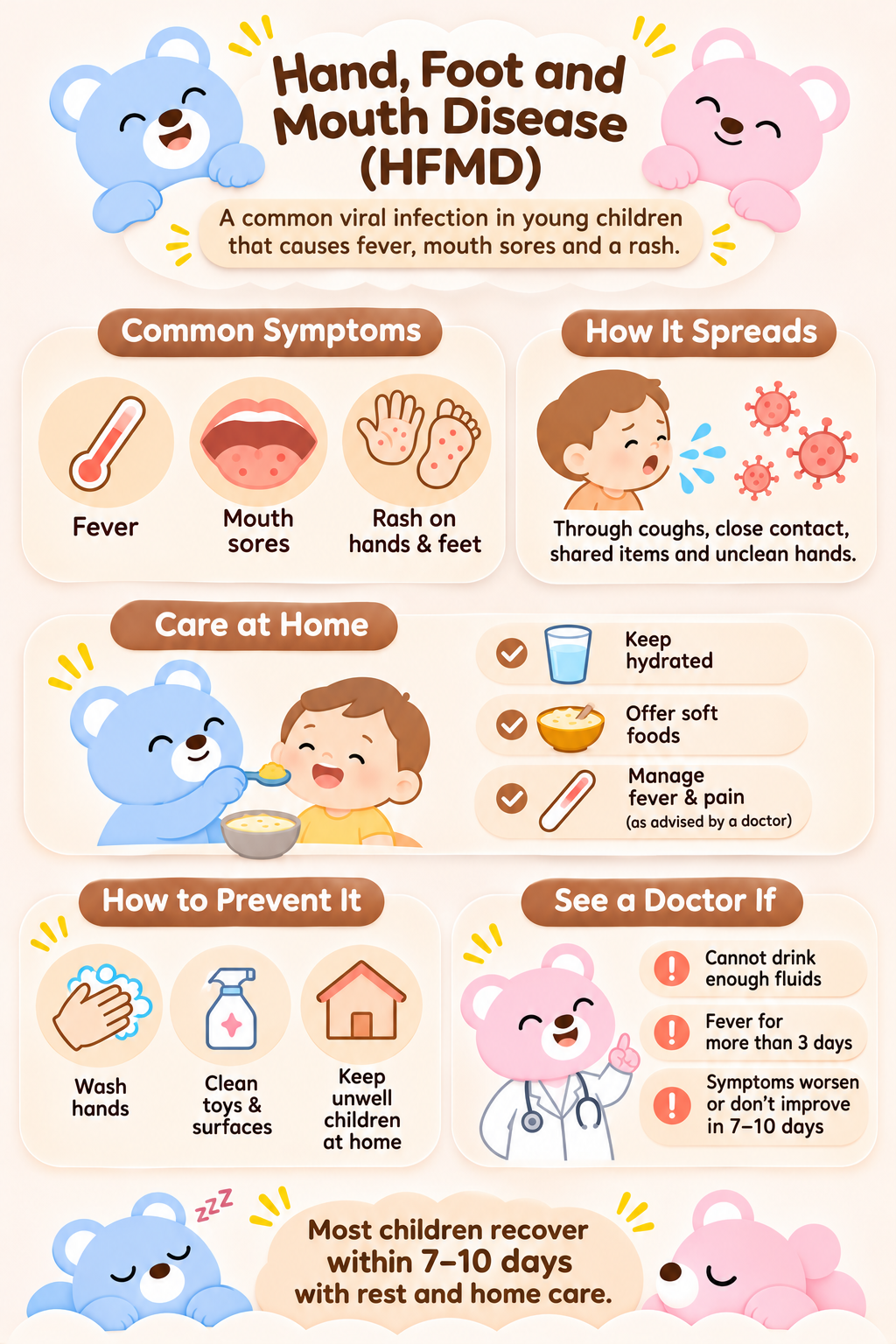


Hand, foot and mouth disease (HFMD) is a common viral infection that mainly affects young children. It can cause fever, painful mouth sores, and small red spots or blisters on the hands and feet. Most people recover within 7 to 10 days without serious complications.
HFMD spreads easily among children, especially in homes, schools and daycare centres. Adults can also catch the infection. Understanding its symptoms, how it spreads and how to manage it at home can help you care for your child and reduce the risk of infection.
What Is Hand, Foot and Mouth Disease?
HFMD is caused by viruses belonging to the enterovirus family. It is most common in children under five years of age, although older children and adults can also develop it.
The condition gets its name from the areas where symptoms commonly appear: the hands, feet, and mouth. Infected children may develop painful sores inside their mouths and a rash on their palms and the soles of their feet. Spots may also appear on the arms, legs or buttocks.
HFMD is usually mild and improves on its own. However, mouth sores can make eating and drinking uncomfortable, particularly for babies and young children.
It is different from foot-and-mouth disease, which affects animals such as cattle, sheep and pigs. The two are separate illnesses.
What Are the Symptoms of HFMD?
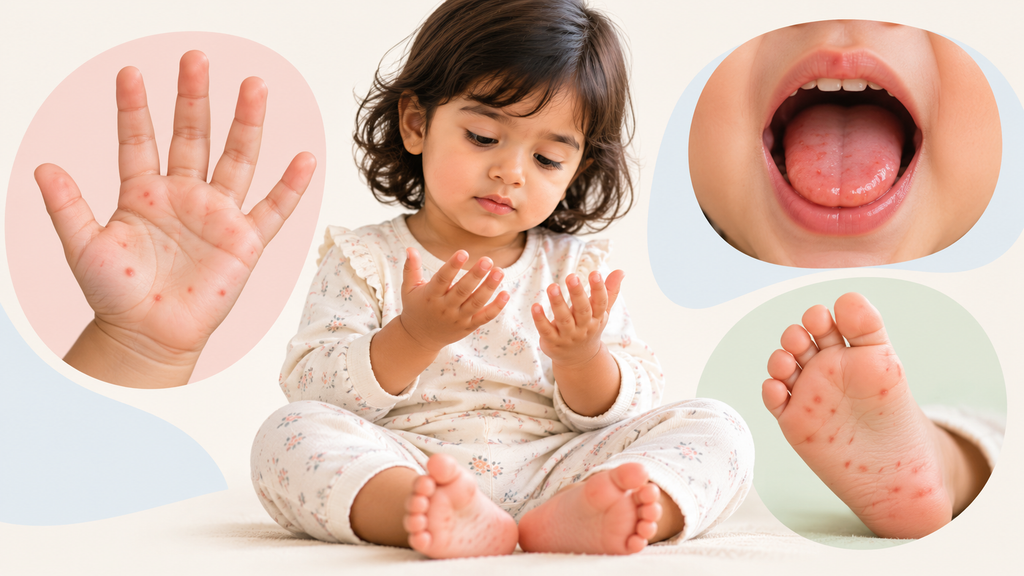
Symptoms usually appear three to five days after catching the virus. The infection may begin with a fever or sore throat before mouth sores and skin rashes develop.
Common symptoms include:
- Fever and sore throat
- Reduced appetite
- Feeling tired or irritable
- Painful sores inside the mouth
- Red spots or small blisters on the hands and feet
- Spots on the arms, legs, or buttocks
Not everyone develops all these symptoms. Some children have only a mild fever or a few spots, while others experience more painful mouth sores and a noticeable rash.
How Do Mouth Sores and Skin Rashes Develop?
HFMD may begin with a fever, sore throat, or a general feeling of being unwell. Small red spots may then appear inside the mouth, sometimes developing into painful sores on the tongue, gums, and inner cheeks.
The skin rash may appear around the same time. It commonly affects the palms and soles, although other areas of the body may also be affected. The spots can develop into small blisters.
Mouth sores can make swallowing painful. A child may refuse food, drink less than usual or drool more because swallowing hurts.
Other illnesses can cause similar symptoms, so do not assume that every fever or rash is HFMD. Contact a healthcare professional if you are unsure about your child’s symptoms.
How Does HFMD Spread?
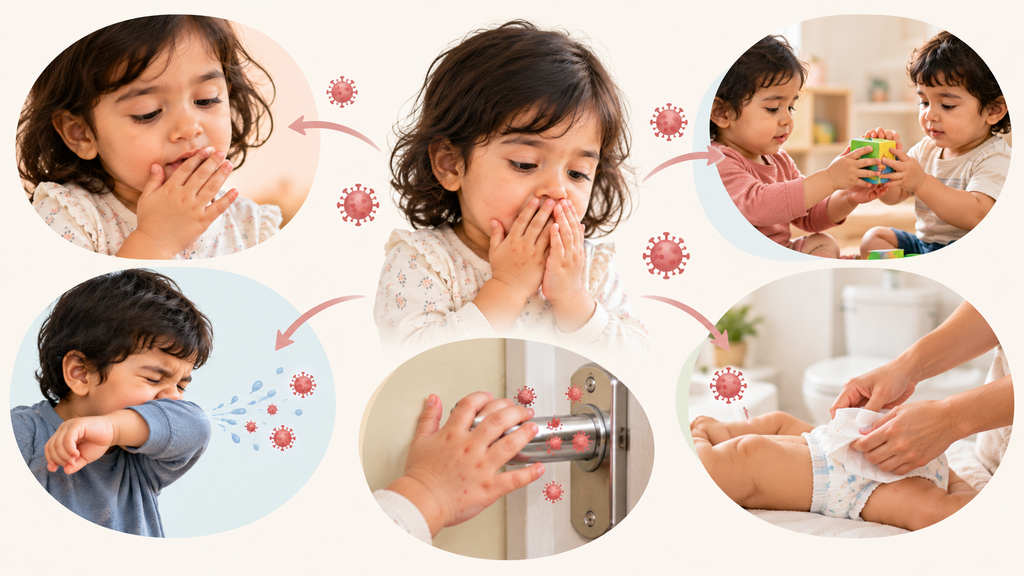
HFMD is contagious and can pass easily from one person to another. It commonly spreads when children play together, share toys, or have close contact.
The virus can spread through saliva, nasal mucus, respiratory droplets, fluid from blisters, and stool. It can also spread through contaminated objects and surfaces.
For example, an infected child may touch their mouth and then pick up a toy. Another child may touch the same toy and put their fingers in their mouth, allowing the virus to enter their body.
The infection can also spread during nappy changes or when helping a child use the toilet if proper handwashing is not followed.
People are usually most contagious during the first week of illness. However, the virus can remain in stool for several weeks after symptoms improve. Maintaining good hygiene is therefore important even after a child appears to have recovered.
How Is HFMD Treated?
There is no specific medicine that cures HFMD. Most people recover within 7 to 10 days. Treatment focuses on easing discomfort, managing fever, and preventing dehydration.
Keep Your Child Hydrated
Painful mouth sores can make drinking uncomfortable, increasing the risk of dehydration. Offer small amounts of fluid regularly rather than expecting your child to drink a large amount at once.
Continue your baby’s usual breast milk or formula feeds. Cool, age-appropriate fluids may be more comfortable than hot drinks.
Watch for signs of dehydration, including a dry mouth, fewer wet nappies, reduced urination or unusual tiredness. Seek medical advice if your child cannot drink enough.
Offer Soft Foods
If your child is eating solids, offer soft foods that are easy to swallow, such as yoghurt or other suitable foods they normally tolerate.
Avoid hot, spicy, salty or acidic foods if they worsen the pain. Do not force your child to eat, but continue offering fluids and small amounts of food.
Manage Fever and Pain Safely
A healthcare professional may recommend suitable medicine to reduce fever or relieve pain. Always check the correct medicine and dose for your child’s age and weight.
Never give aspirin to children. Avoid using mouth gels or other treatments without checking whether they are appropriate for your child’s age.
Antibiotics do not cure HFMD because it is caused by a virus. If symptoms become severe or your child is not improving, a doctor can assess whether further care is needed.
How Can You Prevent HFMD from Spreading?

Good hygiene can help reduce the risk of HFMD spreading within your family, although it cannot prevent every infection.
- Wash hands regularly: Use soap and water for at least 20 seconds, especially after changing nappies, using the toilet or wiping your child’s nose.
- Clean toys and surfaces: Regularly clean shared toys, tables, door handles and other frequently touched objects.
- Avoid sharing personal items: Do not share cups, spoons or towels with someone who has HFMD.
- Avoid direct contact with blisters: Do not touch sores unnecessarily, and wash your hands after accidental contact.
- Cover coughs and sneezes: Use a tissue when possible, dispose of it properly, and wash your hands afterwards.
- Keep unwell children home: If your child has a fever or feels too unwell to participate in normal activities, keep them home from school or daycare. Follow local guidance on returning.
Continue these habits even after the visible symptoms disappear, as the virus may remain in stool for some time.
When Should You Contact a Doctor?
Most children recover at home, but some symptoms require medical attention. Contact your child’s doctor if they cannot drink enough fluids, pass much less urine than usual, have a fever lasting longer than three days, or experience symptoms that worsen or fail to improve within 7 to 10 days.
Very young babies and children with weakened immune systems may need closer medical assessment.
Seek urgent medical attention if your child develops a severe headache with a stiff neck, confusion, unusual difficulty waking up, or other severe symptoms.
If you are pregnant and have been exposed to HFMD, or develop symptoms, contact your doctor for advice. Infection is usually mild, but your healthcare provider can assess your individual circumstances. Inform your maternity care team promptly if you develop symptoms close to your due date, as infection around delivery may require additional attention.
Final Thoughts
Hand, foot and mouth disease is a common childhood infection that spreads easily through close contact, contaminated surfaces and contact with bodily fluids. Fever, mouth sores and a rash on the hands and feet are its most recognisable symptoms, although not everyone develops all of them.
Most people recover within 7 to 10 days with rest, enough fluids and supportive care. Watch for signs of dehydration, practise good hygiene, and contact a healthcare professional if symptoms worsen or recovery does not progress as expected.
Medical References
- Centers for Disease Control and Prevention (CDC): About Hand, Foot, and Mouth Disease
- Research article: Hand, Foot, and Mouth Disease — PubMed Central
- Medscape: Hand-Foot-and-Mouth Disease — Overview
This article is for general information only and is not a substitute for professional medical advice. If you are pregnant and have been exposed to HFMD or develop symptoms, contact your healthcare provider.