
You’ve reached the third trimester, and you’ve made it this far!
This is the last lap! Your baby is developing so rapidly; your body is so busy and, let’s be honest, even picking what to eat can be a challenge at times. You might not have the energy to eat a healthy meal, feel hungry more than ever, or sometimes feel full.
This is where diet can make a difference. There is no need to have a complicated diet or meal plan, nor is there a “perfect” pregnancy diet. All you have to do is to provide nourishing foods that provide you and your baby the energy and nutrients you will need in these final weeks.
Why Third-Trimester Diet Matters
Your baby’s growth is at a fast pace during the third trimester. They are still in the stage of brain growth, strengthening bones, and building up body fat to prepare for birth.
It’s a challenging time too, for you. Your blood volume has gone up, your expanding baby is pressing on your stomach, and other organs and everything seems to be more exhausting, such as walking, sleeping, and even climbing a few stairs.
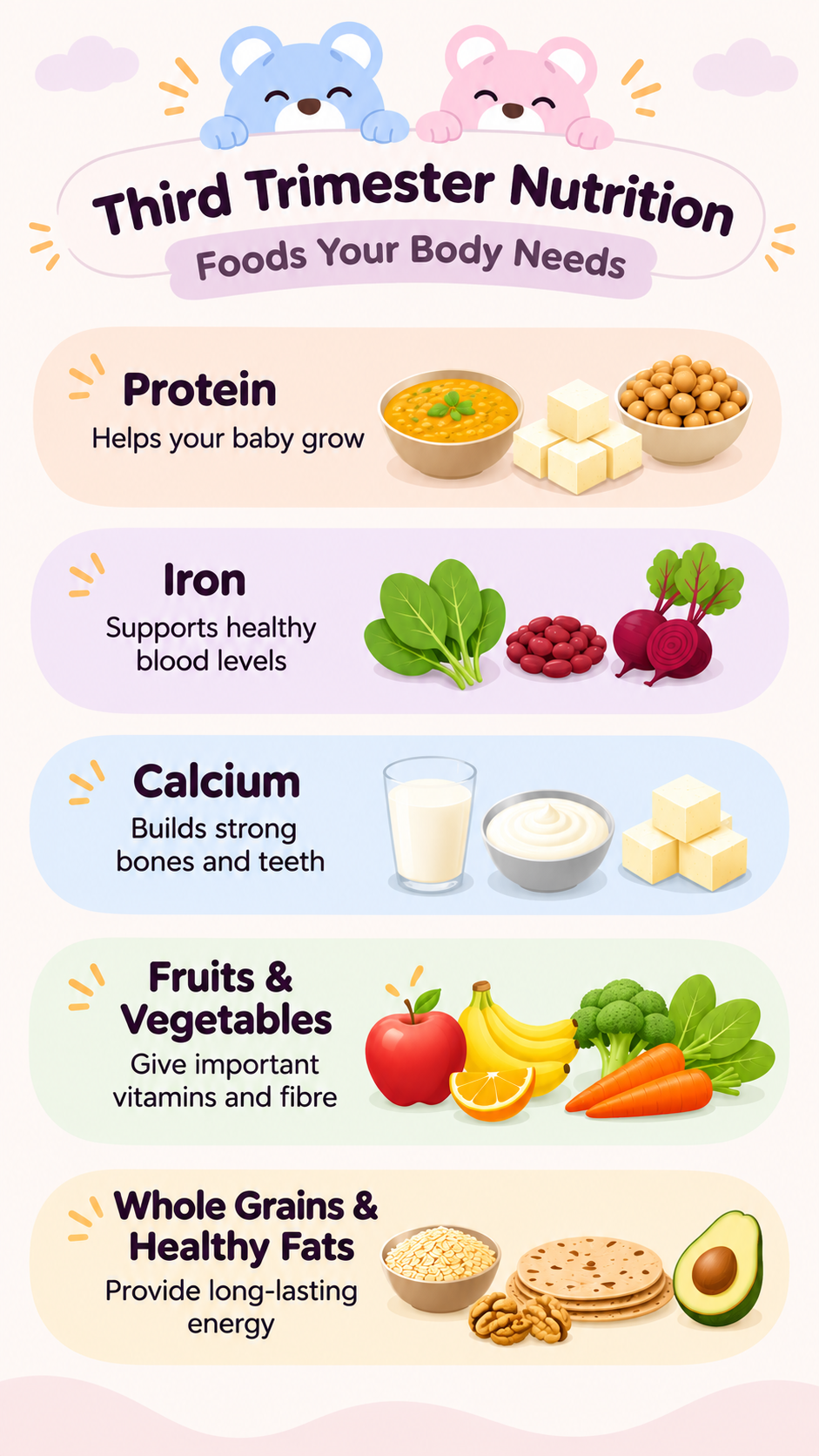
These changing nutritional needs can be met with a balanced diet. Protein helps your baby grow, iron helps to produce enough blood, calcium helps to build strong bones and teeth, and healthy fats are important for your baby’s brain development.
No need to drastically change your diet when you become a parent of two. The more important point is to eat a diverse amount of nutritious foods on a regular basis and to pay attention to your hunger/fullness cues.
Foods To Eat During 3rd Trimester Pregnancy
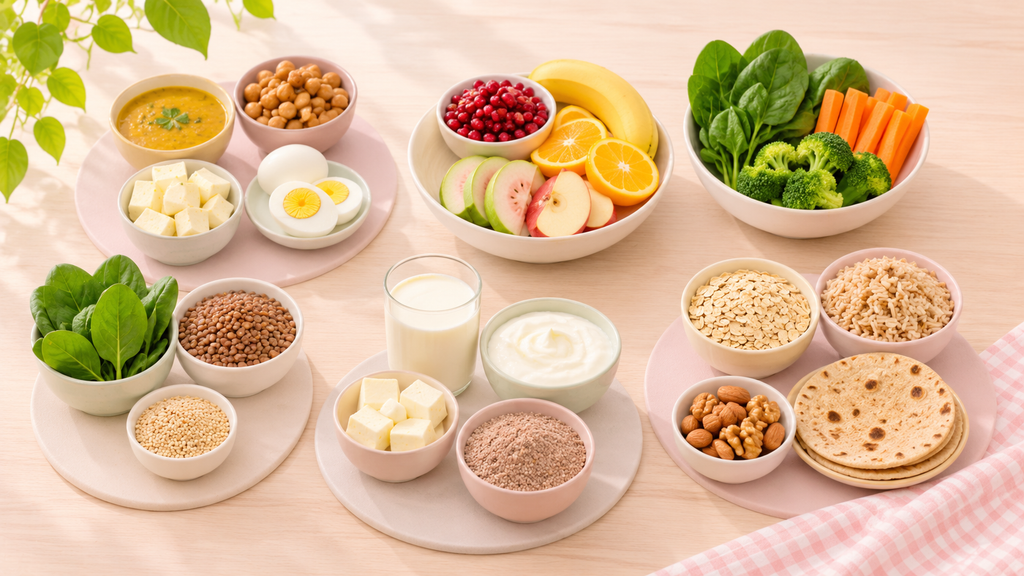
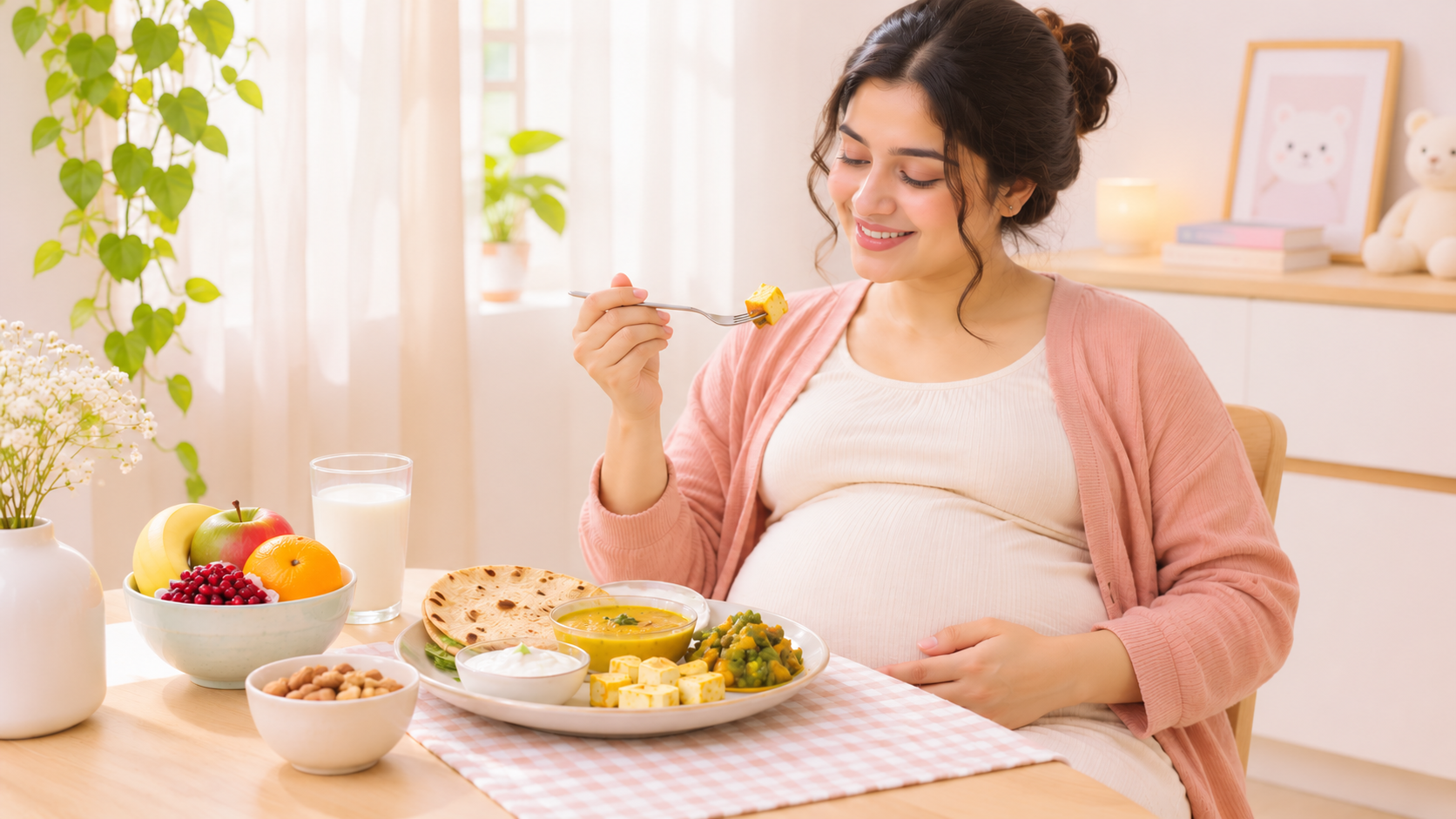
What you have on a third trimester plate is a combination of protein, fruits and vegetables, whole grains, healthy fats, and lots of fluids. You do not need to have all of these in all of your meals. Simply make an effort to eat a variety during the day.
Protein-Rich Foods
Protein is particularly important as your baby grows. Add simple day-to-day foods such as dal, rajma, chana, paneer, curd, eggs, chicken, fish, tofu, and nuts.
Meals and snacks rich in protein may be more comfortable if large meals are uncomfortable. Simple additions to your day can be a bowl of curd with fruit, an egg with toast or roasted chana.
Fruits and Vegetables
Fruits and vegetables are a source of fibre, vitamins, minerals and antioxidants which are good for you and your developing baby.
Consider using seasonal Indian fruits like guava, oranges, apples, bananas, pomegranate and mango to add to your meals and snacks. Vegetables – various coloured – leafy green, carrot, beans, pumpkin, peas, gourds and other vegetables.
It is very important that fresh produce be well washed before consumption, particularly if this is during pregnancy.
Iron-Rich Foods
Your need for iron is higher during pregnancy because your body is making more blood. Add in vegetables and fruits (green leafy vegetables), lentils, beans, chickpeas, sesame seeds, eggs, meat and fish.
You can improve iron absorption by combining plant iron sources with vitamin C-rich foods like lemon, oranges or amla/tomatoes.
If you have been told to take iron by your doctor, do so as directed. Food and supplements complement each other; one doesn’t necessarily take the place of the other.
Calcium-Rich Foods
Calcium is an extremely important element of food to take care of during the final trimester, as it nourishes both yours and the baby’s bones and teeth. You can do this by adding simple calcium-rich foods such as milk, curd, paneer, ragi, sesame seeds, tofu, and leafy green vegetables as ingredients while making your food.
If you’ve been prescribed a calcium supplement by your doctor, continue taking it without any changes. It’s better to avoid taking calcium and iron tablets together. Please consult your doctor if there’s any confusion and for better clarity.
Whole Grains and Healthy Fats
The foods you eat daily might be enough to provide you with the carbohydrates, fibre, and vitamins you need. If you consume foods like whole-wheat roti, brown rice, oats, dalia, millets or whole-grain breads, you don’t have to make any changes to your current diet.
Healthy fats should be an extremely important part of your diet, particularly for your baby’s brain and eye development. Include healthy fats like dry fruits, peanut butter, nuts and seeds, fruits like avocado, or vegetable oil in moderate amounts.
What Foods to Limit or Avoid
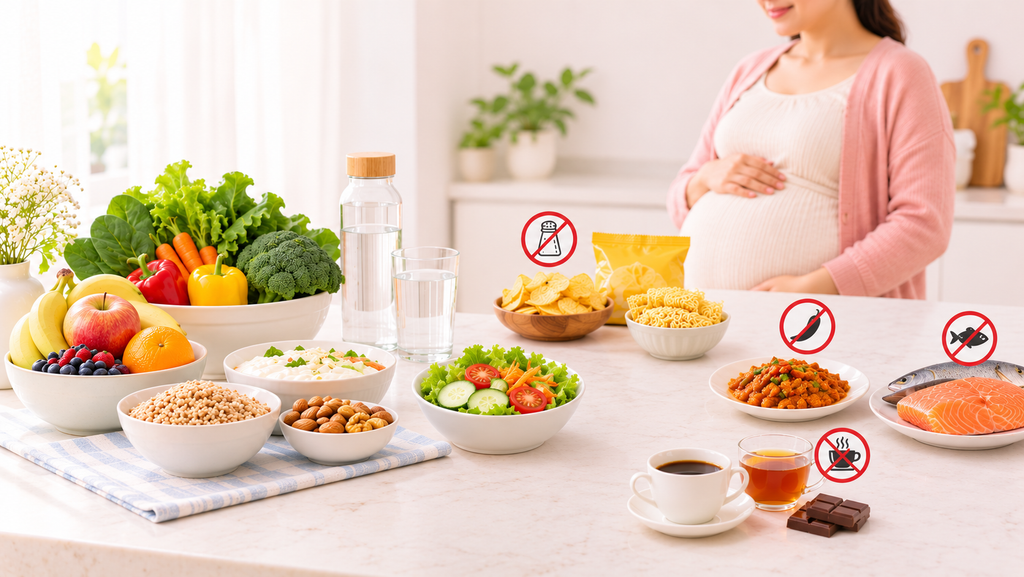
Too Much Salt
Try to limit excess salt during pregnancy, especially if your doctor has advised you to reduce your sodium intake. Avoid making salty packaged foods and snacks a regular part of your diet.
Raw Vegetables
Raw vegetables can carry harmful bacteria or parasites if they are not washed properly. Wash vegetables thoroughly before eating them, or cook them when possible.
Spicy Food
You do not necessarily need to avoid spicy food during pregnancy, but it may worsen heartburn, acidity, or indigestion, which are common in the third trimester. If spicy foods make you uncomfortable, try reducing the amount or choosing milder options.
High-Mercury Fish
Some fish contain high levels of mercury, which can affect your baby’s developing nervous system. Avoid high-mercury fish during pregnancy and choose lower-mercury options instead.
Caffeine
Too much caffeine during pregnancy may increase the risk of pregnancy complications. Keep your intake within the limit recommended by your doctor and remember that caffeine is also found in tea, coffee, chocolate, and some soft drinks.
Final Thoughts
Diet is one thing that matters the most for a baby’s nourishment and development during the final trimester of pregnancy, but diet alone is not enough. Studies have shown that mothers who are more physically active and follow a proper diet plan is more likely to have healthier babies than moms with less physical activity.
It’s always better to consult your gynecologist before making any dietary decisions. Please don’t go out of your way to make major changes to your diet without your doctor’s advice, especially during pregnancy.
That’s it, stay fit, be healthy, and congratulations on your little one!
The information shared in this blog is intended for general educational purposes only and should not be considered professional medical advice.