

Noticing a flat spot on your baby’s head can make any parent worried. You may wonder if your baby is sleeping in the wrong position, whether the flat spot will go away, or if you need to do something about it.
The good news is that flat head syndrome is quite common in babies, especially during the first few months. In most cases, it gets better as your baby grows, moves around more and spends less time in one position. It also does not affect your baby’s brain or development.
Knowing why it happens and what you can do during the day can help you support your baby’s growth while still following safe sleep practices.
What Is Flat Head Syndrome?
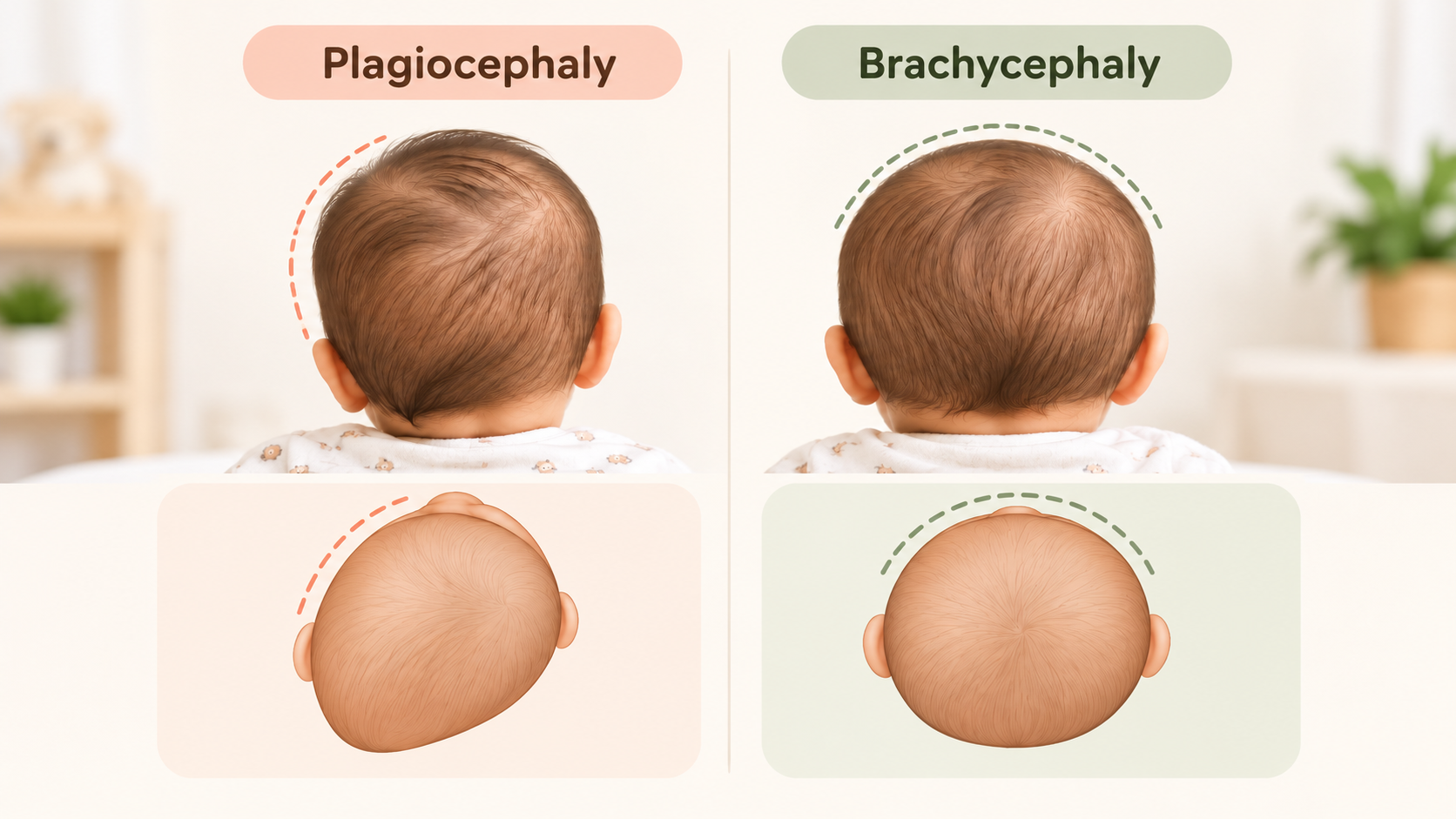
Flat head syndrome is when part of a baby’s head becomes flatter than usual. A baby’s skull is soft in the early months, so staying in the same position for a long time can put pressure on one part of the head and change its shape.
There are two common types of flat head syndrome.
Plagiocephaly
Plagiocephaly happens when one side of the back of the baby’s head becomes flatter than the other side.
You may notice that your baby’s head looks slightly uneven. One ear may also appear a little more forward than the other.
Brachycephaly
Brachycephaly happens when the back of the baby’s head becomes flat more evenly.
This can make the baby’s head look wider, and the forehead may appear slightly more noticeable from the front.
Both types are usually linked to the way a baby spends time lying down. In most cases, they are not a sign that there is a problem with the baby’s brain.
Why Do Babies Get Flat Spots?
The main reason is simple: young babies spend a lot of time lying down.
During the first few months, babies are still learning to control their head and neck. If your baby often rests with the back or one side of their head in the same position, that area can get more pressure.
Some babies also prefer looking in one direction. If your baby always looks towards the same side, the same part of their head may stay against the surface for longer.
Another reason can be a condition called torticollis. This happens when the muscles in a baby’s neck are tight, making it difficult for them to turn their head properly in one direction.
Babies born early can also be more likely to develop a flat spot because their skull is still developing and they may spend a lot of time lying in one position.
Does Sleeping on the Back Cause a Flat Head?

This is one of the biggest worries parents have.
The answer is that your baby should still sleep on their back.
Back sleeping is one of the most important safe sleep habits for babies because it lowers the risk of SIDS, or sudden infant death syndrome.
So, even if your baby has a flat spot, do not put them on their stomach or side to sleep.
A simple rule to remember is:
Back to sleep. Tummy time to play.
During the day, when your baby is awake and you are watching them, you can give them different positions to move and play in. This helps reduce the amount of time they spend resting on the same part of their head.
How Can You Help Prevent a Flat Head?

You do not need to make big changes to your baby’s routine. A few simple habits during the day can help.
Give Your Baby Tummy Time
Tummy time means placing your baby on their tummy while they are awake and you are watching them.
It takes pressure off the back of the head and also helps strengthen the baby’s neck, shoulders, and back.
If your baby does not like tummy time at first, do not worry. Start with short periods and slowly increase the time as your baby gets more comfortable.
You can make tummy time part of playtime instead of treating it like another task.
Encourage Your Baby to Look in Different Directions
Babies naturally look at things that catch their attention, such as your face, a toy, a sound or a light.
When your baby is awake and lying on their back, you can place toys or interesting objects on different sides. This can encourage your baby to turn their head instead of always looking in the same direction.
Mustard seed pillows have been a part of traditional Indian households for generations. Following this familiar tradition, TIDY SLEEP Mustard Pillow brings this traditional practice into a thoughtfully designed baby product.
A small reminder: Always follow safe sleep practices and keep any pillows out of your baby’s unsupervised sleep space.
Change Sides While Feeding and Carrying
Try changing the side you hold your baby on while feeding or carrying them.
This gives your baby a chance to look in different directions and stops them from spending too much time in one position.
You do not need to follow a strict routine. Just try to notice if your baby always seems to rest on the same side.
Give Your Baby More Time to Move
Car seats and baby seats are useful when you need them, especially while travelling. But once you reach your destination, try not to keep your baby in them for longer than necessary.
When your baby is awake, give them time to move, play, stretch and explore different positions while you are nearby.
This gives your baby more chances to move their head naturally during the day.
What Should You Avoid?
When parents notice a flat spot, it is natural to want to fix it quickly.
But changing your baby’s sleeping position is not the answer.
Do not put your baby on their stomach or side to sleep just because you are worried about a flat head.
Your baby should continue to sleep on their back.
You should also avoid using head-shaping pillows or other positioning products inside your baby’s sleep area. These can make the sleep space less safe.
The aim is not to completely prevent every flat spot. The aim is to give your baby plenty of movement during the day while keeping their sleep safe.
Will My Baby’s Flat Head Become Normal?
In many cases, yes.
As your baby grows, they will naturally spend less time in one position. They will start lifting their head, rolling over, sitting, crawling and becoming more active.
All this movement means there is less pressure on one part of the head.
For many babies, the shape of the head improves naturally as they grow. It can continue to improve during the first one to two years.
So, if you notice a small flat spot, it does not necessarily mean your baby’s head will stay that way permanently.
Every baby is different, though. If you are worried about the shape of your baby’s head, it is always a good idea to speak to your paediatrician or doctor.
When Should You Talk to a Doctor?
Most flat spots are not serious. However, there are some things you should not ignore.
Talk to your baby’s doctor if:
- You are worried about the shape or size of your baby’s head.
- Your baby’s head is always tilted to one side.
- Your baby finds it difficult to turn their head.
- The shape of your baby’s head looks unusual from birth.
- You feel that the shape is changing quickly.
Your doctor can check your baby’s head and neck movement and tell you whether the flat spot is simply due to the baby’s position or if something else needs to be checked.
In rare cases, an unusual head shape can be caused by a condition called craniosynostosis. This happens when some of the bones in a baby’s skull join together earlier than they should.
If your baby has tight neck muscles or has trouble turning their head, your doctor may also suggest physiotherapy or simple exercises.
Three Things to Remember
When it comes to flat head syndrome, you do not need to remember a long list of rules.
Just keep these three things in mind.
| What to Do | How to Do It |
| Sleep safely | Always place your baby on their back to sleep. Do not change their sleeping position because of a flat spot. |
| Keep them moving during the day | Give your baby supervised tummy time and let them experience different positions while they are awake. |
| Keep an eye on their head and neck | Notice whether your baby can comfortably turn their head in both directions and whether the shape of their head is changing. |
Seeing a flat spot on your baby’s head can be scary at first, but it is common in young babies and often improves as they grow.
You do not need to choose between helping your baby’s head shape and keeping them safe. Safe sleep should always come first. During the day, simple things like tummy time, changing feeding and carrying positions, and encouraging your baby to look in different directions can give them the movement they need.
And if you are unsure about something, speak to your baby’s doctor. Sometimes a little reassurance from a healthcare professional is all you need to feel more confident about your baby’s development.