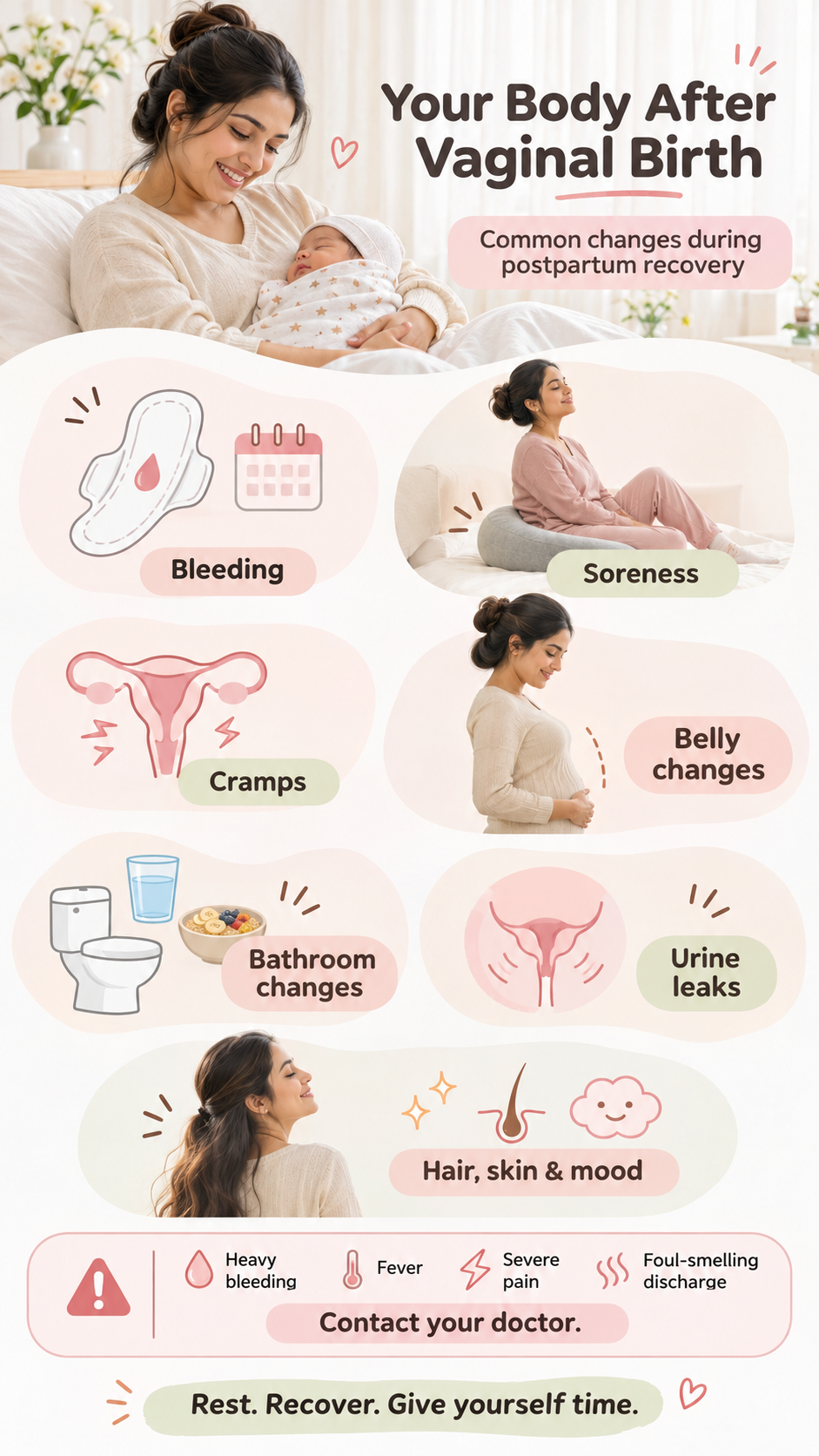


From postpartum bleeding and soreness to hormonal and breast changes, your body goes through many changes after vaginal delivery. Here’s what you can expect during the early stages of postpartum recovery and how you can care for yourself along the way.
What to Expect After a Vaginal Delivery
Your body doesn’t immediately return to how it was before pregnancy, and that’s completely normal. Some changes may last for a few days, while others can take several weeks or longer to settle.
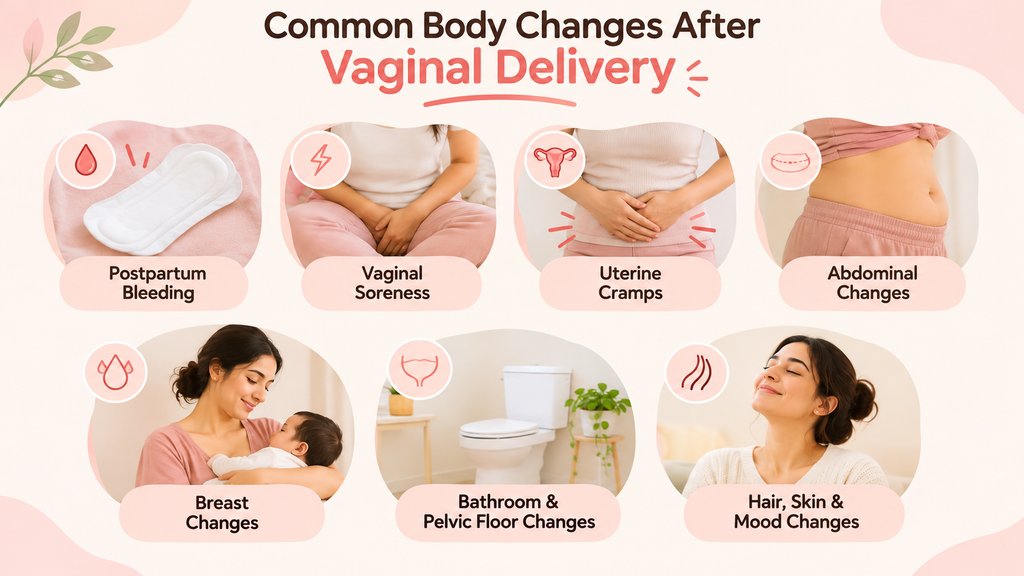
Here are some common changes you may experience after a vaginal delivery.
You May Experience Postpartum Bleeding
Bleeding after vaginal delivery is normal and is known as lochia. It happens as your body sheds blood, mucus, and tissue from the uterus after birth.
The bleeding is usually heavier during the first few days and gradually becomes lighter as your body heals.
You may notice:
- Heavier bleeding initially, which gradually reduces
- The colour changing from red to pinkish or brown and eventually lighter
- Small clots during the early days
- Bleeding that can become slightly heavier after physical activity
Using comfortable maternity pads and changing them regularly can help you stay clean and comfortable during this time.
Your Vagina May Feel Sore
After a vaginal birth, it’s common for the vaginal area to feel swollen, sore, tender, or bruised. If you had a tear or an episiotomy, the area may need more time to heal.
You may notice discomfort when:
- Sitting or walking
- Going to the bathroom
- Changing positions
- Cleaning the area
Try to rest whenever you can and avoid putting unnecessary pressure on the area. Follow your healthcare provider’s advice for caring for stitches or tears.
You May Experience Postpartum Cramps
Your uterus expands significantly during pregnancy and gradually contracts after delivery to return closer to its pre-pregnancy size.
These contractions can feel similar to period cramps and are sometimes called afterpains. They may be more noticeable while breastfeeding because breastfeeding causes your body to release hormones that help the uterus contract.
You can expect these cramps to:
- Be more noticeable during the first few days
- Feel stronger while breastfeeding for some mothers
- Gradually become less noticeable as your uterus recovers
If your pain feels severe, gets worse, or concerns you, speak with your healthcare provider.
Your Belly May Still Look Pregnant
One thing many new mothers aren’t prepared for is that their belly may still look rounded after delivery.
That’s completely normal. Your uterus needs time to shrink, while your abdominal muscles and skin also need time to recover after stretching during pregnancy.
You may notice:
- A soft or rounded belly
- Loose or stretched skin
- Abdominal muscles that feel weaker than before
- Your body changing gradually over the weeks and months
Your Breasts May Feel Full and Tender
A few days after delivery, your breasts may become fuller, firmer, heavier, or tender as your milk comes in.
Some mothers may experience breast engorgement, which can make the breasts feel particularly uncomfortable. Feeding your baby regularly can help, and getting support with breastfeeding positioning can make feeding more comfortable.
You may also notice:
- Leaking breast milk
- Sensitive or sore nipples
- Breasts feeling fuller before feeds
- Tenderness when your breasts become very full
If breastfeeding feels difficult or painful, don’t hesitate to ask your doctor, midwife, or lactation professional for support.
Your Bathroom Habits May Feel Different
Using the bathroom may feel different during the first few days after delivery. Stitches, swelling, soreness, constipation, or changes in your pelvic floor can all contribute to discomfort.
To support your recovery:
- Drink plenty of fluids
- Include fibre-rich foods in your meals
- Avoid straining during bowel movements
- Follow your healthcare provider’s advice about caring for stitches
- Give yourself enough time and privacy when using the bathroom
If passing urine or having a bowel movement becomes unusually painful, or you notice anything that concerns you, speak with your healthcare provider.
You May Leak a Little Urine
Pregnancy and vaginal delivery can put pressure on and temporarily weaken the pelvic floor muscles. Because of this, some women experience small amounts of urine leakage when coughing, sneezing, laughing, or exercising.
This is often temporary as your pelvic floor recovers.
Your Hair, Skin, and Mood Can Change
Hormonal changes after birth can affect more than just your reproductive system. You may notice changes in your hair, skin, energy levels, and emotions.
For example:
- Postpartum hair shedding may become noticeable
- Your skin may look or feel different
- You may experience mood swings
- You may feel more emotional or overwhelmed
- You may experience the baby blues during the first days after birth
The baby blues are common and often improve within about two weeks. However, if feelings of sadness, anxiety, hopelessness, or emotional distress continue, become severe, or make it difficult to care for yourself or your baby, reach out to your healthcare provider.
When Should You Contact Your Doctor?
While many changes after vaginal delivery are a normal part of recovery, some symptoms need medical attention.
Contact your healthcare provider if you experience:
- Very heavy or suddenly increasing bleeding
- Severe or worsening abdominal or vaginal pain
- Fever or chills
- Foul-smelling vaginal discharge
If something feels unusual or you’re simply worried about a symptom, it’s always okay to contact your healthcare provider and ask.
How to Care for Your Body After Vaginal Delivery

Postpartum recovery is not about getting back to your old routine immediately. Your body needs time, rest, nourishment, and gentle care.
A few simple things can help:
- Rest whenever possible: Sleep may be difficult with a newborn, so take opportunities to rest when you can.
- Stay hydrated: Keep water nearby, especially while feeding your baby.
- Eat nourishing meals: Protein, fruits, vegetables, whole grains, and fibre can support your recovery.
- Keep yourself comfortable: Choose soft, breathable clothing and comfortable maternity products.
- Keep your surroundings clean: Waterproof dry sheets can help protect your bed from postpartum bleeding, leaks, and everyday messes.
- Make baby care easier: A changing mat and burp cloth can help keep everyday baby-care routines cleaner and more comfortable.
- Listen to your body: Give yourself time before returning to strenuous activities or exercise.
- Ask for help: You don’t have to manage recovery and newborn care alone.
Final Thoughts
Your body goes through a lot during pregnancy and childbirth, so recovery deserves patience and care. Some changes may disappear quickly, while others take more time.
Be gentle with yourself, ask for help when you need it, and remember that there is no single timeline for postpartum recovery. You’ve just done something incredible, and your body deserves time to heal.