


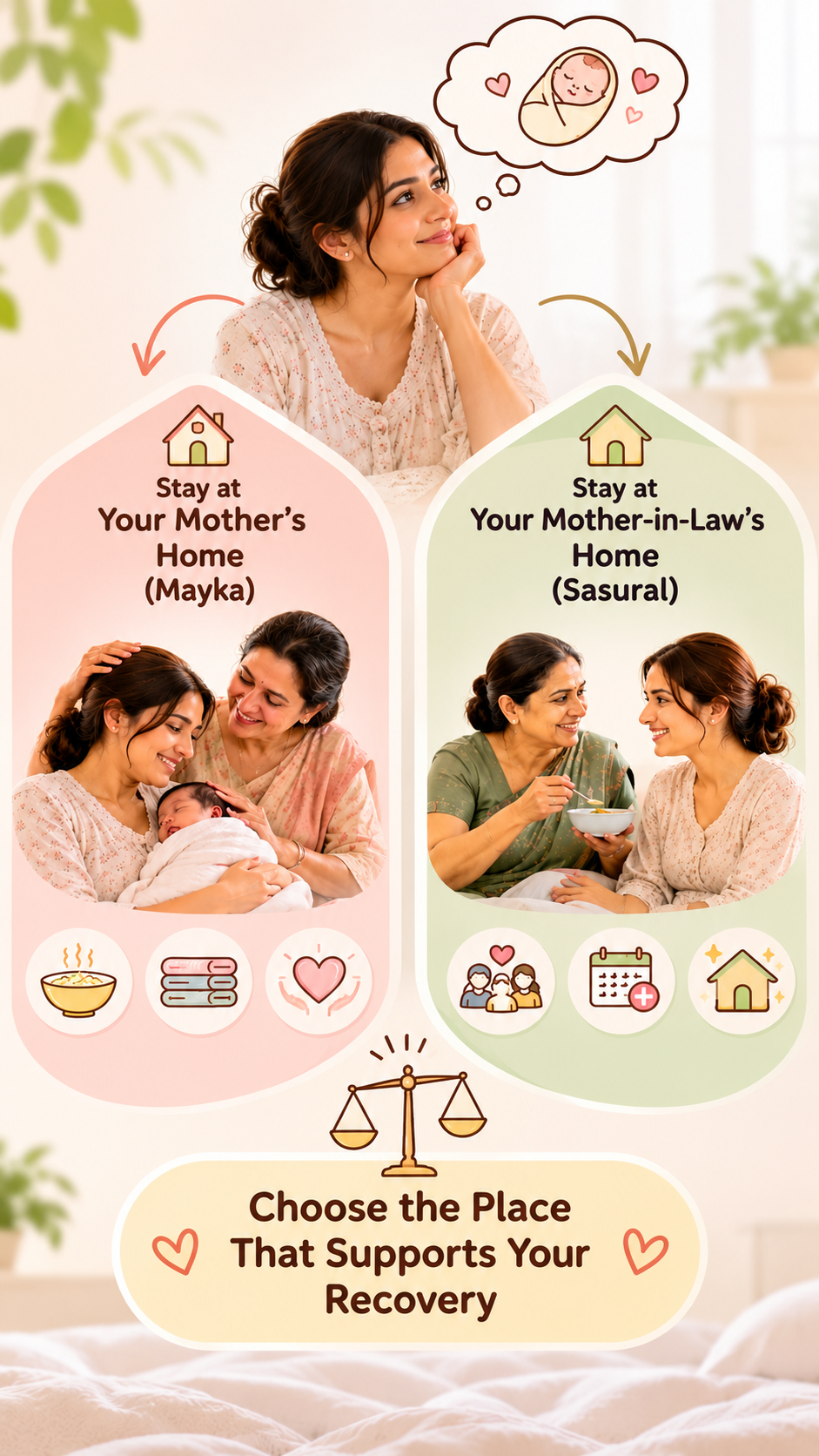
In many Indian families, there is a familiar question that comes up when a baby is on the way: “Delivery ke baad tum mayke jaogi ya sasural mein rahogi?”
Traditionally, many new mothers stay with their own parents for some time after childbirth. Others stay with their in-laws, where family members may help with the baby and household responsibilities. Both arrangements can work well, but the decision can also bring expectations, emotions, and sometimes a little family tension.
Your mother may be excited to have you home, while your mother-in-law may also look forward to spending time with the new baby. Meanwhile, you may simply be wondering where you will feel most comfortable while recovering from childbirth.
There is no single right answer!
Why a Mother’s Comfort Matters After Delivery

Childbirth brings many changes. Your body needs time to recover, your sleep may become irregular, and you are learning how to care for a newborn while adjusting to a new routine.
During this time, even simple tasks such as taking a shower, eating a meal, or getting enough rest can feel difficult without help.
That is why your comfort matters when deciding where to stay. Think about the everyday things that will make recovery easier. Will someone help prepare meals? Can you ask for help without feeling uncomfortable? Will you have a quiet place to rest when you need it?
Emotional comfort matters, too. You should be able to talk about your worries, ask questions, and admit when you feel tired without being judged.
In Indian homes, family members may have strong opinions about what a new mother should eat, how she should rest, or how she should care for her baby. Advice can come from a place of love, but you should still feel comfortable discussing what works for you.
The best arrangement is one where your needs are taken seriously, rather than one chosen only because it is expected by the family.
The Special Bond Between a New Mom and Her Own Mother
For many women, their own mother is the person they turn to when they feel overwhelmed. There may be a sense of familiarity that makes it easier to say, “Mummy, aaj bahut thak gayi hoon,” without needing to explain much more.
If you have a close relationship with your mother, staying at your mayka may feel comforting. You may already know how she prepares your favourite meals, understands your habits, and notices when something is bothering you.
However, every mother-daughter relationship is different. Some women feel most comfortable with their mothers, while others have a more complicated relationship or prefer having their own space.
There is no need to choose your mother’s home simply because other people say that a daughter belongs at her mayka after delivery. What matters is whether the relationship offers the kind of support you need now.
Staying With Your Mother After Delivery: Comfort, Care and Expectations
Staying with your mother may offer practical benefits, especially if she understands your preferences and is willing to help with daily tasks. She might prepare meals, help with laundry, or look after the baby while you rest or take a shower. Familiar surroundings can also make the first few weeks feel less overwhelming.
But even in a loving home, differences can arise.
Your mother may have raised children using certain methods and may expect you to follow the same practices. You might hear, “Humne toh bachchon ko aise hi paala hai,” when you prefer a different approach.
For example, you may have questions about feeding routines, visitors, or how much rest you need. These differences do not mean either of you is wrong or uncaring. They simply mean that you are learning to navigate a new stage of your relationship.
Staying With Your Mother-in-Law: Building Trust and Finding Comfort
Your mother-in-law’s home can also be a supportive place to recover after childbirth. A caring mother-in-law may help with meals, household work, and baby care while giving you the time you need to settle into motherhood.
For some women, staying with their in-laws also means having their partner nearby and making it easier for both parents to become involved in the baby’s daily routine.
The experience often depends on the relationship you share. If you feel respected and comfortable speaking openly, you may find it easier to ask for help and explain your needs.
At the same time, you may feel hesitant to express discomfort, especially if you worry about being seen as ungrateful. Perhaps you prefer fewer visitors, need more privacy, or want to follow advice from your healthcare provider rather than a traditional practice.
A supportive mother-in-law will make room for these conversations. She does not need to agree with every choice to respect your right to make decisions about your recovery and baby.
If you decide to stay with your in-laws, your partner can help communicate expectations and ensure that everyone understands how to support you.
How to Choose Without Hurting Anyone’s Feelings

Choosing where to stay after delivery can feel like choosing between two families you care about. You may worry that your mother will feel rejected if you stay with your in-laws, or that your mother-in-law will feel left out if you go to your mayka.
Try to separate the decision from the idea of loyalty.
You are not choosing which family matters more. You are deciding which arrangement will work best during a period when your needs may be different from usual.
Consider the practical details. Where will you have the most reliable help? Which home offers a comfortable place to rest? How easy will it be to attend medical appointments? Who is available to help without expecting you to manage household duties at the same time?
You can also consider whether a shorter stay, a later visit, or a different arrangement might work better. You do not have to follow a fixed plan if your circumstances change.
Both families can remain involved in the baby’s life, even if you spend the first few weeks in only one home.
Talking Openly With Your Partner and Both Families
Start by speaking to your partner privately. Explain what you are worried about and what kind of support would make you feel comfortable. Try to discuss practical needs rather than framing the decision as a choice between your mother and mother-in-law.
Once you have a plan together, speak to both families with kindness and clarity.
You do not need to provide a long list of reasons or defend every detail. A calm explanation can help everyone understand that the decision is about your current needs, not about rejecting anyone.
Your partner should also take responsibility for these conversations rather than leaving you to manage everyone’s feelings while recovering.
What Matters Most During Postpartum Recovery
Whichever home you choose, the support you receive matters more than the address.
Make sure your daily needs are considered. You should have access to regular meals, enough rest, a comfortable place to sleep, and help with household tasks. You should also be able to attend follow-up appointments and contact your healthcare provider if you have concerns.
Privacy is important, too. You may not always feel ready to entertain visitors or pass the baby around during family gatherings. It is reasonable to set limits on visits and ask others to respect your wishes.
Your family can also help by following the care advice you receive from your healthcare provider rather than pressuring you to follow practices that make you uncomfortable.
Most importantly, allow yourself to change the arrangement if it is not working. You may feel differently after a few days or weeks, and your support needs may change as you recover.
You do not have to prove that you can manage everything on your own. Accepting help is part of looking after yourself during this transition.
Final Thoughts: Choose the Home That Supports Your Recovery
After delivery, there may be many opinions about where you should stay. Your mother may have one plan, your mother-in-law another, and relatives may have their own ideas about what is traditional.
But you are the one recovering from childbirth and adjusting to life with your baby.
Permit yourself to choose the arrangement that works best for you. Talk openly with your partner, explain your needs to both families, and remember that choosing one home does not mean closing the door on the other.
The goal is not to make everyone equally happy with every decision. It is to create a supportive environment where you can recover, care for your baby, and feel comfortable asking for help.
You deserve that support, wherever you choose to stay.



This was helpful