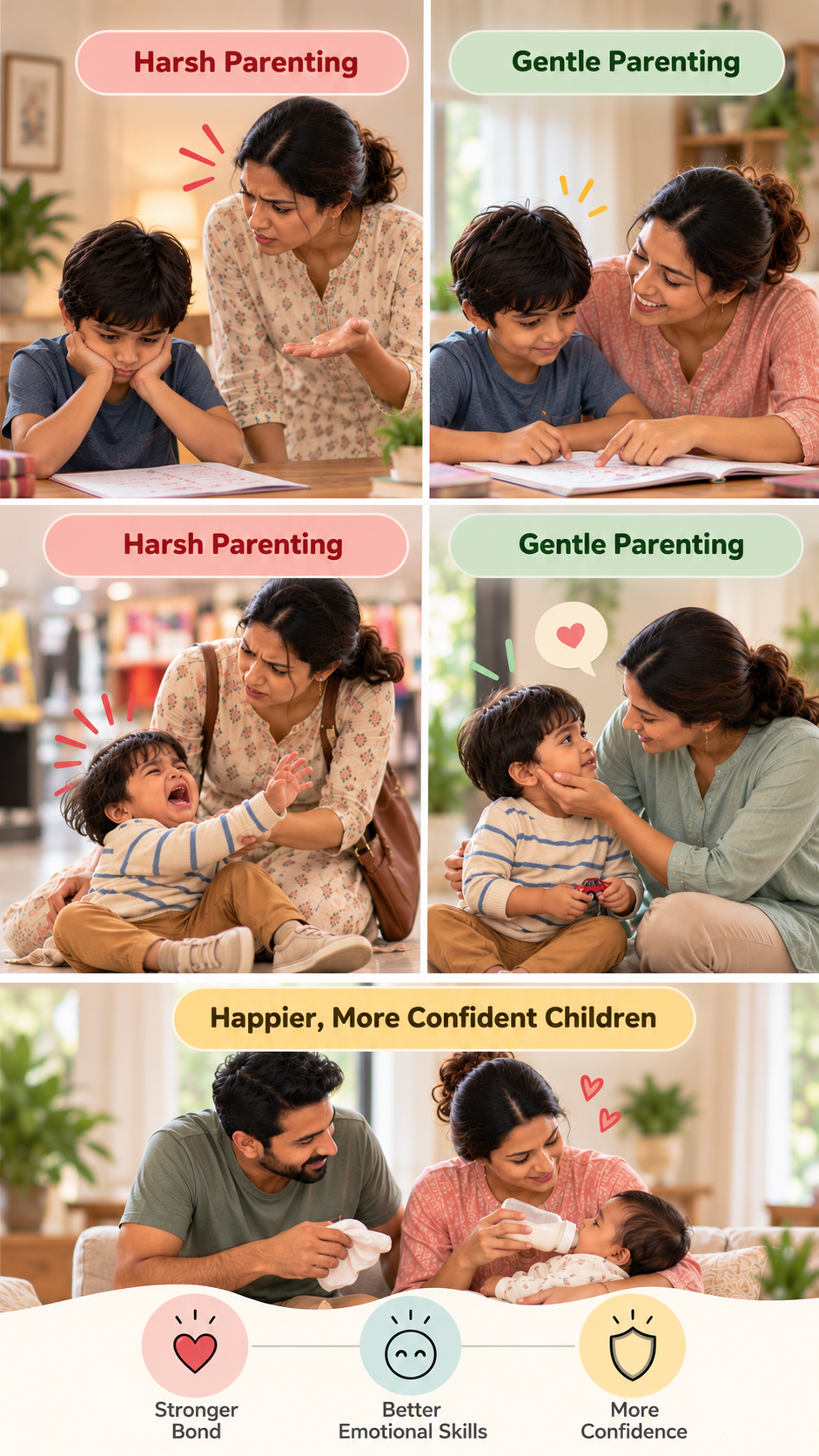


“Sharma ji ka beta toh class mein first aaya hai. Tumhare marks kyun kam hain?”
If you grew up in an Indian household, this line might sound very familiar. From school marks and sports to eating habits and career choices, children often end up being compared to someone else’s child. This is where gentle parenting can help.
Gentle parenting focuses on understanding your child’s feelings, setting clear boundaries, and guiding them with patience. It does not mean saying yes to everything or letting children do whatever they want. It means teaching them right from wrong without making them feel scared, ashamed, or unloved.
And in Indian families, where advice from relatives, school pressure, and traditional expectations are part of everyday life, this approach can help parents build stronger relationships with their children.
Let’s understand how gentle parenting works, explore practical parenting tips, and see how parents can support each other while raising a happy and confident child.
What Is Gentle Parenting? Understanding Gentle Parenting Approaches
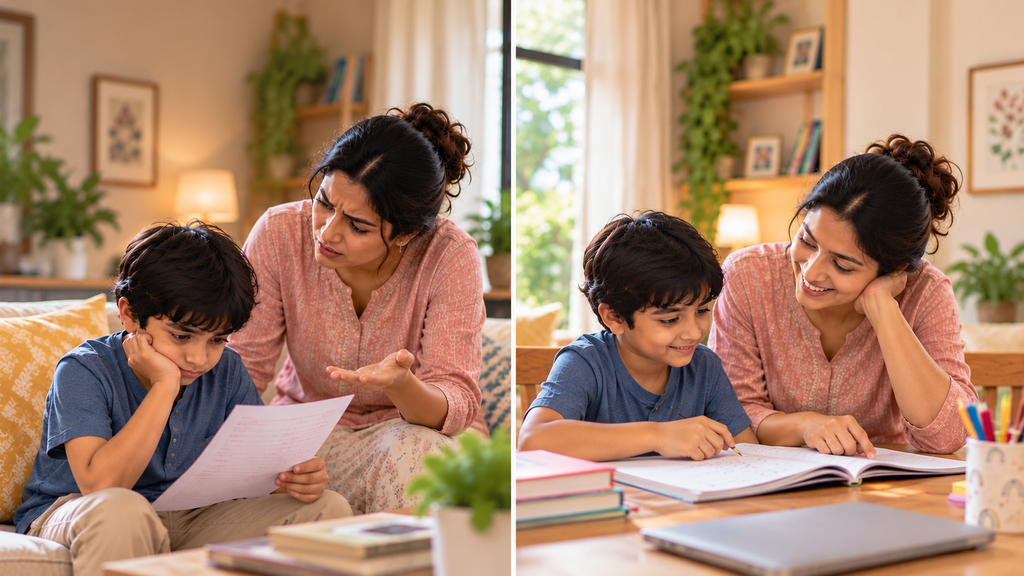
Imagine your child comes home with lower marks than expected. Your first reaction might be, “Itna padhaya, phir bhi marks nahi aaye?”
It is natural to worry about your child’s studies. But before reacting, try asking what happened. Perhaps they found a subject difficult, felt nervous during the exam, or need more help understanding a topic.
Gentle parenting encourages you to understand the reason behind your child’s behaviour before deciding how to respond.
It focuses on three simple things: connection, understanding, and boundaries. You listen to your child, acknowledge their feelings, and help them learn from their actions.
Gentle parenting does not mean there are no rules at home. Homework, bedtime, respectful behaviour, and safety still matter. The difference is how you communicate those expectations.
Different Types of Parenting Styles
Every Indian family has its own way of raising children. Some parents expect children to follow instructions without questioning them. Others encourage children to share their opinions and make their own decisions.
These differences are part of the wider discussion around parenting styles. Understanding them can help you think about what works best for your family.
Gentle parenting aims to balance emotional support with clear expectations. You can listen to your child without agreeing to every request, and you can set rules without making them feel frightened.
For example, imagine your child wants to play outside, but their homework isn’t finished yet.
You could say, “Pehle homework khatam karo, phir hi bahar jaana hai!” Or you could explain, “I know you want to play with your friends. Let’s finish your homework first, and then you can go outside.”
Both responses set a limit. However, the second also acknowledges your child’s feelings and explains the reason for the rule.
The aim is not to remove discipline from parenting. It is to help children understand why certain rules matter.
Gentle Parenting vs Authoritative Parenting: Understanding the Difference
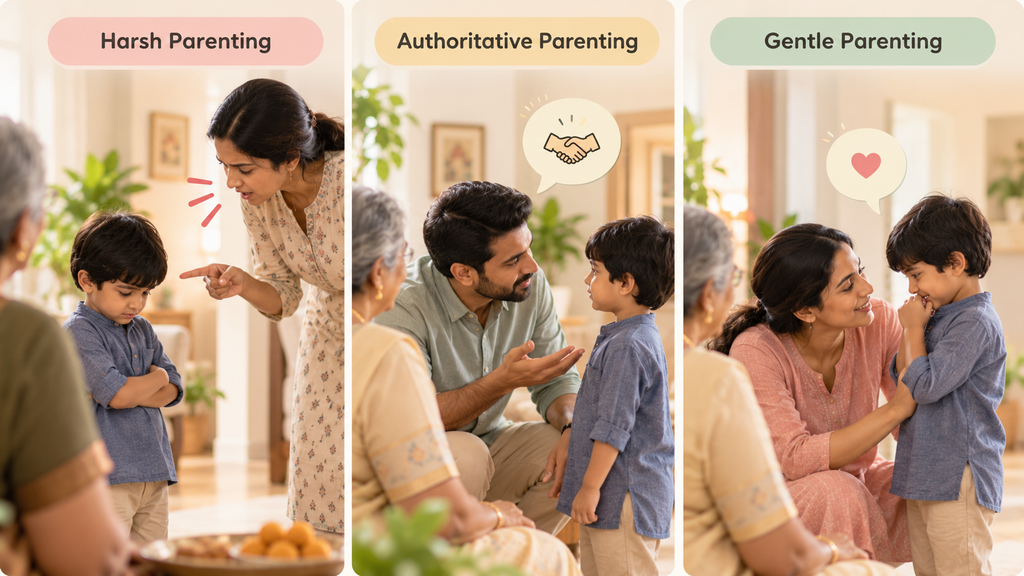
Authoritative parenting combines warmth with clear rules and expectations. Parents listen to their children, explain boundaries, and encourage them to become independent.
Gentle parenting shares many of these qualities. It also strongly emphasizes understanding emotions and avoiding fear-based discipline.
| Situation | Harsh Parenting | Authoritative Parenting | Gentle Parenting |
| Bachcha relatives ko greet karne se mana karta hai | “Aajkal ke bachchon ko bilkul tameez nahi hai! Sabko hello bolo!” | “Bado ko greet karna respect dikhane ka ek tareeka hai. Chalo, hello bol do.” | “Kya tumhe sharam aa rahi hai? Koi baat nahi, jab comfortable feel karo tab hello bol sakte ho.” |
| Bachcha public mein tantrum karta hai | “Chup ho jao! Sab log dekh rahe hain. Kitna embarrassing hai!” | “Mujhe samajh aa raha hai ki tum upset ho, lekin public mein chillana theek nahi hai. Aao, baat karte hain.” | “Mujhe pata hai tum upset ho. Pehle thoda calm ho jaate hain, phir baat karenge.” |
| Bachcha apne toys share nahi karta | “Kitne selfish ho! Abhi toy share karo!” | “Sharing karna achhi habit hai. Tum dono turn by turn khel sakte ho.” | “Mujhe pata hai tumhe apna toy pasand hai. Kya hum dono ke liye turn-taking ka koi tareeka nikaalein?” |
| Bachche ke marks kam aate hain | “Tum bilkul dhyaan nahi dete! Doosre bachchon se kuch seekho.” | “Dekhte hain kahan dikkat aayi aur agli baar marks improve karne ke liye kya kar sakte hain.” | “Mujhe pata hai tum disappointed ho. Koi baat nahi, hum saath mein difficult topics samjhenge.” |
| Bachcha vegetables khane se mana karta hai | “Jab tak sabzi khatam nahi hogi, table se nahi uthoge!” | “Vegetables healthy rehne ke liye zaroori hain. Thoda sa try karke dekho.” | “Kya tum ek chhota sa bite try karna chahoge? Batao tumhe iska taste kaisa lagta hai.” |
Tips for Handling Big Feelings
Every parent has faced a moment when a child starts crying in a shop, refuses to leave the park, or throws a tantrum just when guests arrive.
It can feel embarrassing, especially when people start watching or offering unsolicited advice.
In that moment, try to focus on your child rather than what everyone else is thinking. First, make sure everyone is safe. Then acknowledge the feeling while keeping the boundary.
You might say, “I know you really want that toy, and you’re upset that I’m saying no. But we are not buying it today.”
This response shows your child that their feelings matter, even when the answer is still no.
If your child is very upset, give them time to calm down. You do not need to explain everything while they are crying or shouting. Once they feel calmer, talk briefly about what happened and what they can try next time.
You can also model how to manage emotions. If you lose your temper, take responsibility and apologise when appropriate.
Saying, “I was frustrated, but I should not have shouted. I’m sorry,” teaches your child that making mistakes is human and that people can repair relationships.
Gentle parenting is not about preventing every tantrum. It is about helping children learn to manage difficult feelings with support and guidance.
Gentle Co-Parenting: How Parents Can Share Baby-Care Responsibilities
In many Indian households, mothers are expected to remember everything about the baby. From feeding times and changing clothes to appointments and bedtime routines, the responsibility can quickly become overwhelming.
But raising a baby is not meant to be one parent’s job alone.
Gentle co-parenting means working together, sharing responsibilities, and supporting each other through both the happy and difficult days. The division will not always be exactly equal. Work timings, feeding needs, recovery after childbirth, and other family responsibilities may affect what each parent can do.
What matters is that both parents communicate openly rather than assuming one person will manage everything.
And if grandparents or other family members offer helpful support, it is okay to accept it. Someone preparing a meal or helping with household tasks can give new parents a little more time to rest.
When parents support each other, they also create a more caring environment for their child.
Understanding Gentle Parenting, With Love and Patience
Gentle parenting doesn’t require you to stay calm every second or have an answer to every problem. It is about understanding your child, setting clear boundaries, and building a relationship based on trust and respect.
The next time you hear, “Sharma ji ka beta toh aisa nahi karta,” pause for a moment. Your child has their own personality, strengths, and pace of learning. Your job is not to raise a copy of another child. It is to help your child grow into a caring, confident, and responsible person.