

Pregnancy comes with a long list of questions, and sometimes even something as simple as adding a little sweetness to your tea can make you stop and wonder, “Boht meetha khaney ka man kar raha hai, par is this actually safe for my baby?”
If you’ve been trying to cut down on sugar, you may have come across stevia. It’s a popular sugar substitute, often described as a plant-based alternative to sugar. But is stevia safe during pregnancy? How much is okay? And can it have any effect on your baby?
Let’s break it down simply.
What are Artificial Sweeteners?
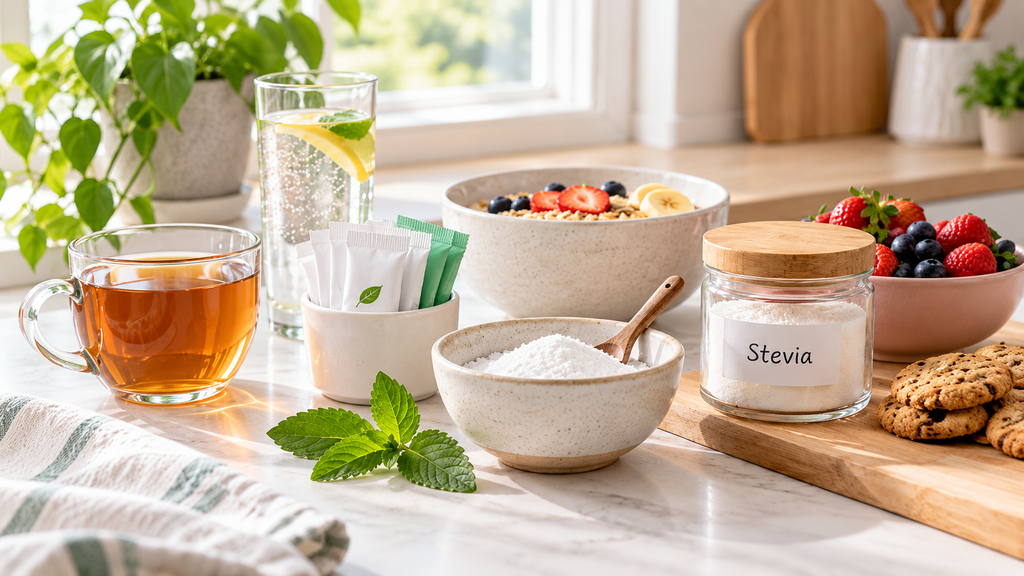
You may have heard the terms artificial sweeteners, sugar substitutes, or low-calorie sweeteners used when talking about products that replace regular sugar.
Simply put, these are ingredients used to make food and drinks taste sweet without using the same amount of regular sugar. They can be found in things like beverages, packaged foods, oral-care products, and some pharmaceutical products.
Common Types of Sugar Substitutes
There are several different types of sugar substitutes, and they aren’t all the same.
Some commonly used ones include aspartame, sucralose, saccharin, acesulfame potassium, sugar alcohols, and stevia. Each sweetener has its own properties and recommended intake limits. So, if you see “Sugar-free” or “no added sugar” on a product, it’s worth checking the ingredient list to see which sweetener has been used.
For pregnancy, the general recommendation is to use sugar substitutes in moderation rather than relying on them heavily.
What is Stevia?
So, where does stevia fit into all of this?
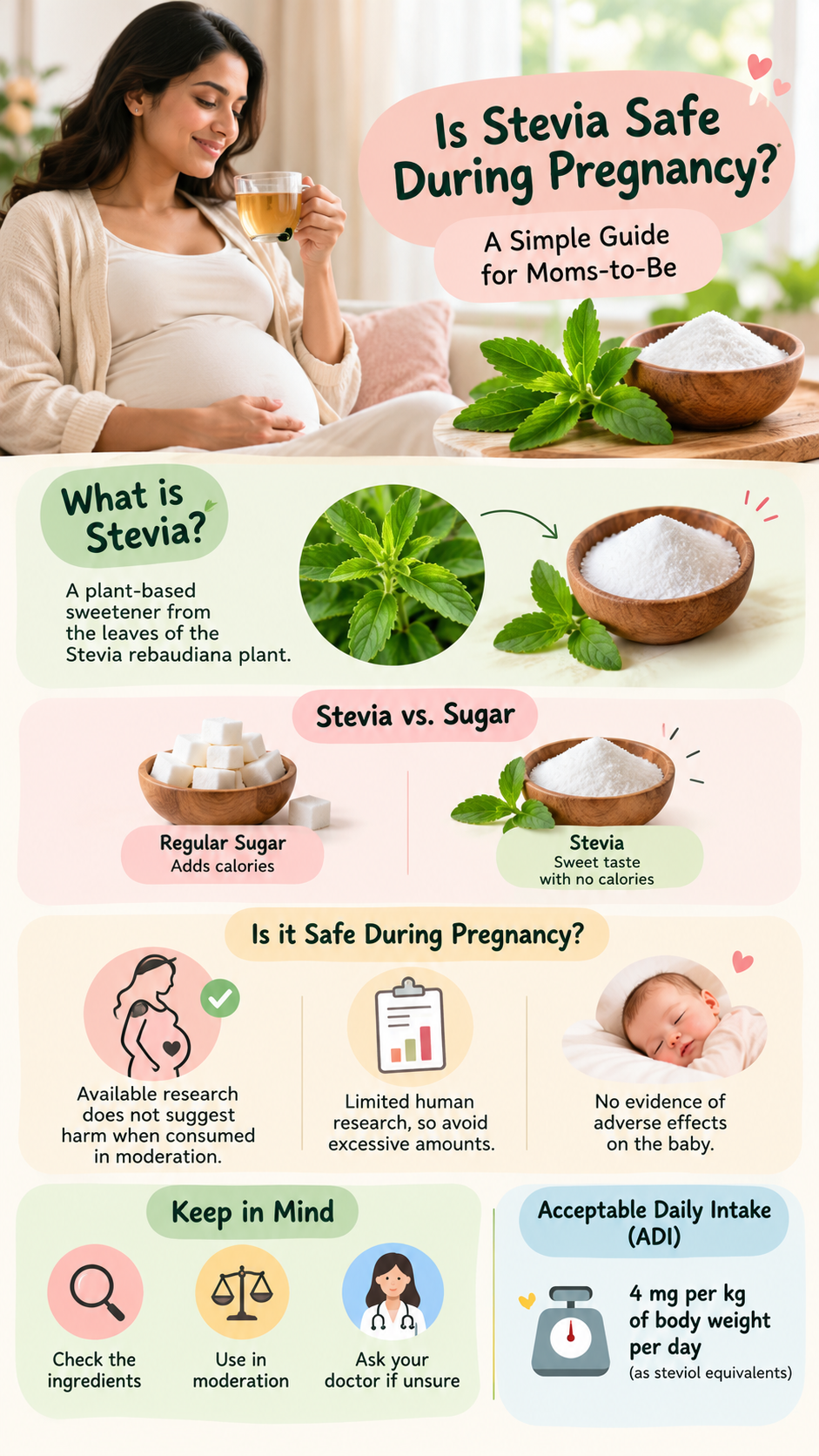
Stevia comes from the leaves of the Stevia rebaudiana plant. It is used as a non-caloric sweetener and has become popular among people who want to reduce their sugar intake. Because it provides a sweet taste without adding regular sugar, you may find it in drinks, foods, and tabletop sweeteners.
Stevia vs. Sugar
The biggest difference is quite simple: stevia provides sweetness without the same amount of sugar as regular table sugar. Stevia is also much sweeter than sugar, so only a small amount is needed to create a sweet taste.
You may also come across different products that contain stevia, so they aren’t necessarily all identical. Checking the ingredient list can help you understand what you’re actually consuming. And while stevia comes from a plant, that doesn’t mean you need to consume unlimited amounts. Just like with other sweeteners, moderation is important.
Is Stevia Safe During Pregnancy?

Now for the question you’re probably most interested in:
Can you have stevia while pregnant?
The available information does not suggest that approved sugar substitutes cause adverse effects during pregnancy when consumed appropriately. When it comes to stevia specifically, studies in animals did not find increased toxicity in embryos or negative effects on fertility or pregnancy outcomes. However, there is limited information on the effects of stevia use during human pregnancy.
So, what does that mean for you?
It means there’s no need to panic if you’ve been using stevia, but it also makes sense not to consume excessive amounts. A moderate approach is the safest and simplest way to look at it.
What Research Says
Available evidence on sugar substitutes during pregnancy has not suggested an increased risk of toxicity, adverse pregnancy outcomes, or problems in newborns when they are consumed appropriately. At the same time, the amount of information available can vary depending on the specific sweetener. Stevia has less pregnancy-specific human data than some other commonly used sweeteners.
That’s why it’s better to think of stevia as something that can be used in moderation and within recommended limits, rather than assuming that you can have as much as you like because it is plant-based.
Can Stevia Affect the Baby?
This is a very understandable concern for any expecting mother.
The available evidence does not suggest that stevia causes adverse pregnancy outcomes. Studies in animals also did not find increased toxicity or negative effects on pregnancy outcomes. However, because there is limited research on stevia use specifically during human pregnancy, it’s sensible to avoid excessive consumption.
If you’ve occasionally used stevia in your tea, coffee, food, or other drinks, there’s no reason to panic based on the available information. If you’re consuming large amounts regularly, however, it is worth discussing your intake with your healthcare provider.
How Much Stevia Can You Have During Pregnancy?
This is where things can get a little confusing.
You may come across something called the Acceptable Daily Intake (ADI) when reading about sweeteners. The ADI is an amount considered safe to consume daily over a lifetime based on available safety information. It isn’t a recommended amount that you need to consume every day. For stevia, the acceptable daily intake is 4 mg per kg of body weight per day, expressed as steviol equivalents.
What are steviol equivalents?
Stevia contains sweet-tasting compounds called steviol glycosides. When scientists talk about the acceptable daily intake (ADI) for stevia, they express the amount as steviol equivalents. This provides a standard way of measuring the different steviol glycosides together based on the amount of steviol they correspond to.
For example, for a person weighing 60 kg, the ADI is 240 mg of steviol equivalents per day.
Here is a list of calculated steviol equivalents per day based on the ADI mentioned in the referenced research. However, these figures are intended as a general reference only. Always consult your doctor or healthcare provider before making decisions about sweetener intake during pregnancy.
| Body Weight | ADI of Steviol Equivalents per Day |
| 40–49 kg | 160–196 mg |
| 50–59 kg | 200–236 mg |
| 60–69 kg | 240–276 mg |
| 70–79 kg | 280–316 mg |
| 80–89 kg | 320–356 mg |
| 90–99 kg | 360–396 mg |
| 100–109 kg | 400–436 mg |
Understanding the Acceptable Daily Intake
One important thing to remember is that the amount of stevia in a product can vary.
So, it isn’t always as simple as saying, “You can have X number of packets every day.” Different products may contain different amounts and forms of stevia.
The ADI is best understood as a safety reference rather than a target.
If you use stevia occasionally, you don’t need to feel like you have to calculate every tiny amount you consume. But if you use several stevia-containing products throughout the day, checking the labels can help you keep track of your overall intake.
What Should You Keep in Mind?
If you enjoy stevia during pregnancy, there’s no need to make things complicated.
Check the Ingredients
Take a quick look at the ingredient list of the product you’re buying. The word “stevia” on the front of a package doesn’t necessarily tell you everything that’s inside. Some products may contain other ingredients alongside the sweetener.
Checking the label can help you understand what you’re consuming and how frequently you’re having it.
Moderation Matters
This is probably the simplest takeaway: moderation matters.
Sugar substitutes can be useful when you want to reduce your sugar intake, but they don’t need to become a major part of your diet.
It’s also important to remember that replacing sugar with a sweetener doesn’t automatically make a food healthier. During pregnancy, your overall diet still matters much more than whether you choose sugar or a sugar substitute in one particular food or drink. If you’re unsure about a particular stevia product, use it frequently, or have concerns about how much you’re consuming, it’s a good idea to speak with your doctor or dietitian.
Conclusion
So, is stevia safe during pregnancy?
Based on the available information, stevia and other approved sugar substitutes do not appear to increase the risk of adverse pregnancy outcomes when consumed appropriately. However, information specifically about stevia use during human pregnancy is limited.
The simplest approach is to use stevia in moderation, check the ingredients in the products you choose, and stay within the established acceptable daily intake.
And if you’ve already been using stevia during pregnancy, there’s no need to immediately worry. If you have concerns about your individual intake or a particular product, your healthcare provider can help you make a choice that’s right for you and your baby.
Medical Sources
- https://pubmed.ncbi.nlm.nih.gov/31358725/
- https://americanpregnancy.org/pregnancy/artificial-sweeteners-and-pregnancy/
- https://pmc.ncbi.nlm.nih.gov/articles/PMC4229159/pdf/0601003.pdf
This article is for general information only and is not a substitute for professional medical advice.